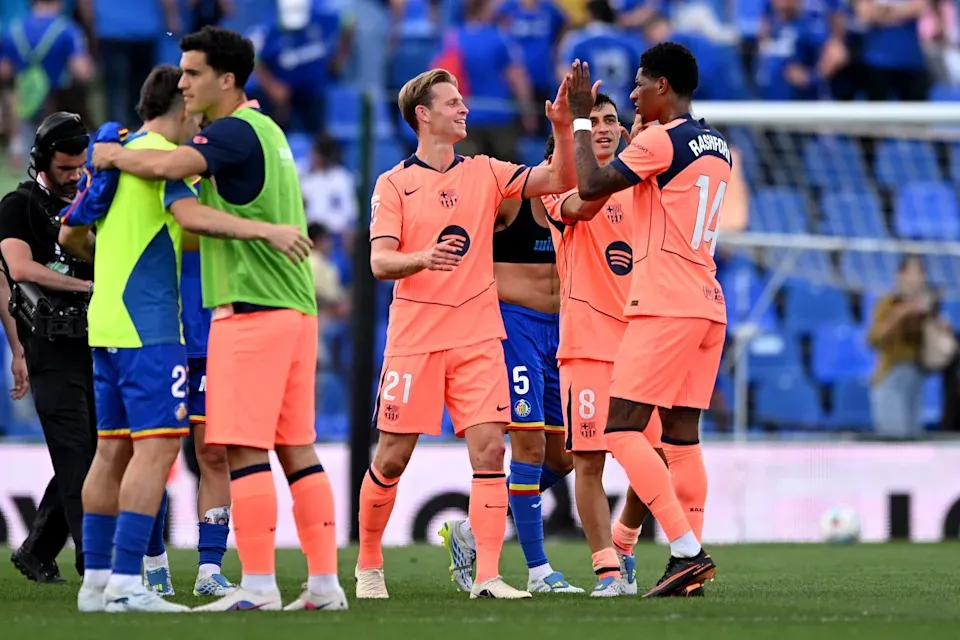
Frenkie de Jong has delivered a candid assessment of his time at FC Barcelona, shedding light on the emotional and professional challenges of competing at one of football’s most demanding institutions. In an interview with The Guardian, the midfielder acknowledged moments of uncertainty, including thoughts of leaving the club. His reflections underscore the psychological intensity of elite sport while illustrating how sustained exposure to high expectations has shaped his development both on and off the field.
Navigating Expectations at a Global Football Powerhouse
Joining FC Barcelona placed Frenkie de Jong at the center of a high-stakes sporting and commercial ecosystem. Tasked with anchoring the midfield during a transitional period, he entered an environment defined by legacy, scrutiny, and relentless performance benchmarks.
At institutions of this scale, players operate under continuous evaluation—not only in tactical terms but also as representatives of a global brand. This dual responsibility often amplifies both opportunity and pressure.
A Rare Admission of Vulnerability
In his conversation with The Guardian, De Jong offered an unusually transparent account of his experiences, acknowledging that the intensity of expectations occasionally led him to question his long-term future at the club.
Such openness is notable in a sport where public narratives are typically controlled. His remarks highlight the psychological demands placed on elite athletes, where performance consistency must be maintained amid constant scrutiny and external noise.
Growth Through Adversity
Despite these challenges, Frenkie de Jong emphasized the transformative impact of his time at FC Barcelona. Competing at the highest level has refined his tactical intelligence, resilience, and adaptability.
From a broader analytical perspective, exposure to such environments often accelerates professional growth. The ability to navigate adversity becomes a defining trait, enhancing both individual performance and long-term career sustainability.
The Financial and Institutional Context
Modern football operates within a complex financial framework, where player performance is intrinsically linked to commercial outcomes. Clubs like FC Barcelona function as global enterprises, with athletes representing significant investments in terms of transfer fees, wages, and brand value.
In this context, De Jong’s experiences reflect not only personal challenges but also the systemic pressures embedded within a multi-billion-rupee industry. Managing expectations becomes as critical as delivering results on the pitch.
Humanizing the Elite Sporting Experience
The reflections shared by Frenkie de Jong offer a nuanced perspective on life inside elite football. Beyond the accolades and public perception lies a complex reality shaped by ambition, scrutiny, and continuous adaptation.
As FC Barcelona continue to evolve, his journey serves as a reminder that success at the highest level is not solely defined by performance metrics, but also by resilience and personal growth in the face of sustained pressure.
Comments