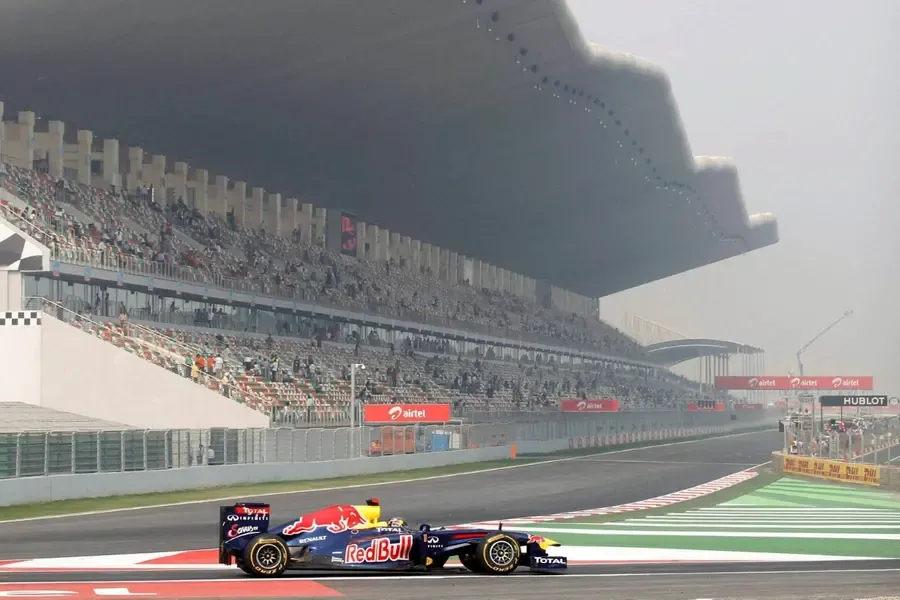
India has renewed its ambition to rejoin the global Formula 1 calendar, with Sports Minister Mansukh Mandaviya indicating a संभावित return by 2027. While discussions are underway, no formal agreement has yet been secured with Formula One Group. The proposed revival is expected to center on the Buddh International Circuit, which previously hosted F1 races. The initiative reflects a broader strategy to leverage global sporting events for economic growth, infrastructure utilization, and international branding, while navigating financial, regulatory, and operational complexities.
Policy Intent Signals Renewed Sporting Ambition
India’s renewed push to host Formula One underscores a strategic pivot toward high-value global sporting assets. Sports Minister Mansukh Mandaviya has indicated that preliminary groundwork is underway, though he stopped short of confirming a finalized agreement.
This distinction is critical. Hosting Formula 1 involves multi-layered negotiations spanning commercial rights, taxation frameworks, and long-term contractual obligations with Formula One Group. The absence of a confirmed deal suggests that India remains in the exploratory phase rather than execution.
Buddh International Circuit: Asset Reutilization Strategy
The Buddh International Circuit is expected to anchor India’s F1 revival plans. Once a prominent venue on the global circuit, it hosted races from 2011 to 2013 before being sidelined due to fiscal and regulatory disputes.
From an infrastructure economics perspective, reactivating an existing asset offers cost efficiencies compared to developing a new venue. However, significant capital expenditure—likely running into hundreds of crores in Rs.—will be required to meet updated Fédération Internationale de l'Automobile (FIA) standards, modernize facilities, and ensure global broadcast readiness.
Financial Viability and Revenue Architecture
Reintroducing Formula 1 into India entails a complex financial model. Hosting fees alone can amount to substantial sums in Rs., while operational expenditures include logistics, security, marketing, and compliance.
Yet, the revenue upside is equally compelling. Formula 1 events typically drive multi-sector economic activity, including tourism inflows, hospitality demand, media rights monetization, and corporate sponsorships. For India, the event could act as a high-impact economic multiplier, stimulating both direct and indirect revenue streams.
Branding, Soft Power, and Global Positioning
Beyond immediate financial returns, hosting Formula One serves as a powerful branding instrument. It positions India alongside leading global economies that host premium sporting events, enhancing its international visibility and credibility.
Such events also contribute to soft power by showcasing organizational capability, infrastructure sophistication, and cultural vibrancy. In parallel, the return of Formula 1 could catalyze growth in India’s domestic motorsport ecosystem, attracting investment into grassroots racing, engineering talent, and automotive innovation.
Structural Challenges and Risk Factors
Despite the strategic appeal, several structural challenges persist. Historical issues—particularly around tax classification and revenue-sharing disputes—must be resolved to ensure long-term sustainability.
Additionally, Formula 1’s evolving calendar dynamics mean that India faces competition from emerging markets seeking entry into the championship. Securing a stable slot will require not only financial commitment but also policy clarity and institutional coordination.
Outlook: From Aspiration to Execution
India’s intent to bring back Formula 1 by 2027 reflects a broader convergence of sports, economics, and global branding strategy. However, translating this vision into reality will depend on disciplined execution, stakeholder alignment, and financial prudence.
If successfully implemented, Formula 1’s return could mark a transformative milestone—redefining India’s role in the global sports economy while unlocking long-term commercial and strategic value.
Comments