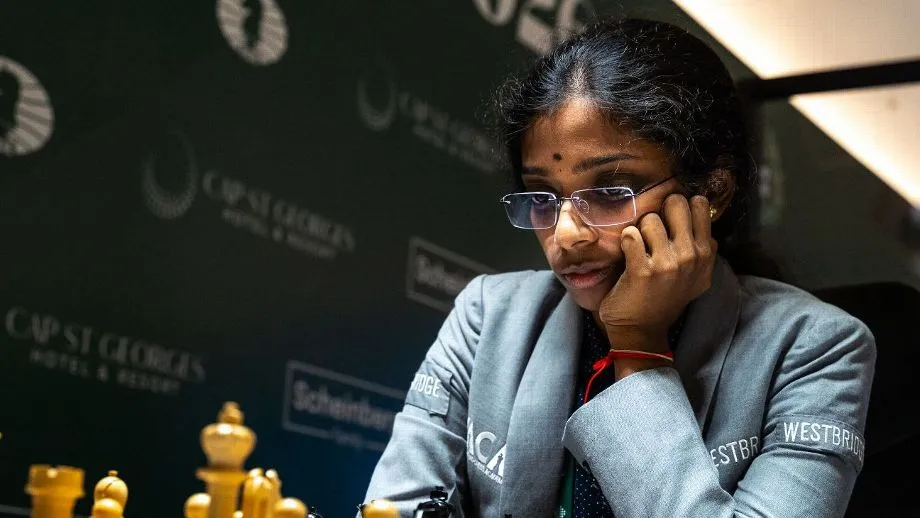
Elite chess is witnessing a decisive generational shift, led by R Vaishali, R Praggnanandhaa, and Javokhir Sindarov. Their recent tournament performances reflect not only competitive excellence but also a broader transformation in how the sport creates value—through digital engagement, sponsorship inflows, and global audience expansion. These young grandmasters are redefining performance benchmarks while influencing the commercial trajectory of chess. As traditional power structures face disruption, their rise signals a more dynamic, youth-driven ecosystem with far-reaching implications for talent development, institutional investment, and the sport’s long-term financial sustainability.
A New Competitive Order Emerges
The upper echelons of global chess are undergoing a structural realignment. At the center of this transformation are R Vaishali, R Praggnanandhaa, and Javokhir Sindarov, whose performances in international tournaments have consistently challenged entrenched hierarchies.
Vaishali’s ascent reflects a blend of positional discipline and psychological resilience, enabling her to compete effectively across formats. Praggnanandhaa continues to build on his reputation as one of the most tactically versatile players of his generation, while Sindarov’s aggressive style has proven particularly disruptive against higher-rated opponents.
Performance Efficiency and Competitive Metrics
In modern chess, success is increasingly defined by efficiency—maximizing outcomes with minimal error margins. Praggnanandhaa’s games frequently demonstrate a high conversion rate from advantageous positions, a critical metric at elite levels. Similarly, Vaishali’s consistency in maintaining equilibrium under pressure underscores her strategic maturity.
Sindarov, by contrast, leverages volatility as a strategic tool, often steering games into complex tactical territories where his calculation depth becomes a decisive advantage. Collectively, these players exemplify the evolving metrics of success in professional chess: precision, adaptability, and risk calibration.
The Expanding Chess Economy
The rise of these young grandmasters coincides with a broader expansion of chess as a commercial enterprise. Increased digital consumption, streaming platforms, and global tournaments have elevated the sport’s economic profile.
India, in particular, has emerged as a key growth market, with players like R Praggnanandhaa and R Vaishali attracting sponsorships and institutional backing. Meanwhile, Javokhir Sindarov symbolizes the growing influence of Central Asian federations in shaping competitive narratives.
This convergence of talent and market expansion is driving increased investment, enhancing prize pools, and creating new revenue streams across the chess ecosystem.
Strategic Innovation and Modern Playstyles
Contemporary chess is characterized by a synthesis of classical fundamentals and cutting-edge computational preparation. Vaishali’s positional clarity, Praggnanandhaa’s opening depth, and Sindarov’s tactical aggression highlight the diversity of approaches defining the modern game.
Their matches often feature high-complexity positions, reflecting extensive preparation supported by advanced engines. This evolution is not merely technical—it represents a shift toward a more data-informed and strategically nuanced form of competition.
Long-Term Outlook and Industry Impact
Looking ahead, the trajectories of these players suggest sustained influence on both competitive and commercial fronts. As they accumulate experience and refine their strategies, their potential to dominate global rankings becomes increasingly plausible.
For stakeholders—including sponsors, tournament organizers, and governing bodies—the emergence of such talent presents an opportunity to deepen engagement and expand the sport’s global footprint. Enhanced visibility, coupled with rising audience interest, is likely to translate into long-term financial growth.
Conclusion
The rise of R Vaishali, R Praggnanandhaa, and Javokhir Sindarov represents a pivotal moment in the evolution of chess. Their performances encapsulate a new era defined by innovation, resilience, and economic opportunity. As they continue to redefine competitive standards, the sport itself is poised for a period of sustained growth and global relevance.
Comments