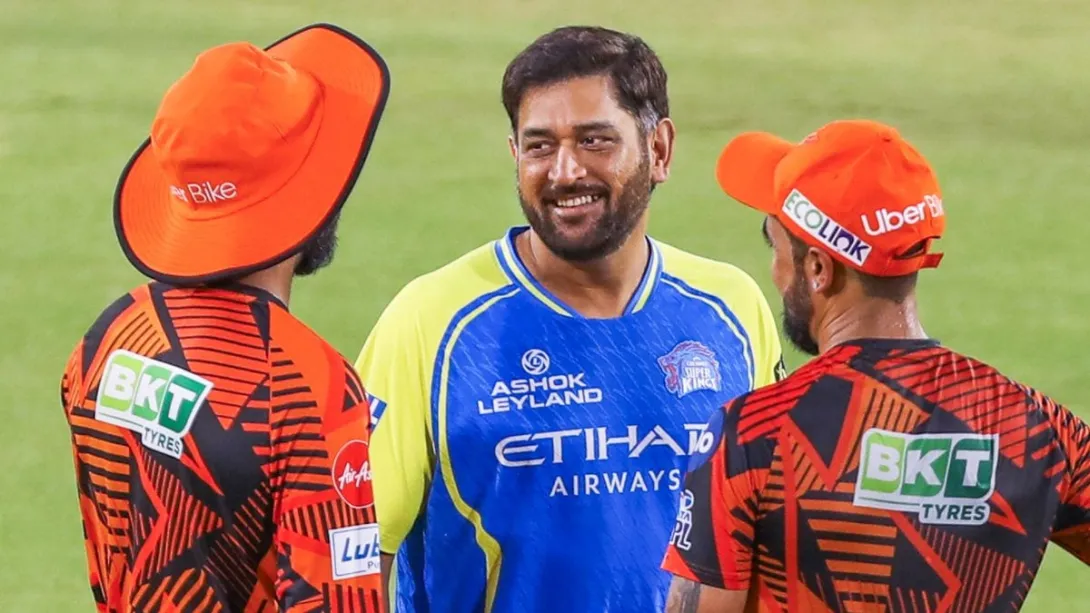
As the Indian Premier League dominates India’s sporting consciousness, a parallel debate is emerging around the structural imbalance in sports investment. The proposal to build another large-capacity cricket stadium in Mumbai—despite its already extensive infrastructure—highlights the disproportionate prioritisation of cricket over other disciplines. Driven by revenue maximisation and the race to host marquee finals, stakeholders are equating scale with value. Yet, this expansion raises critical concerns about capital allocation, opportunity cost, and whether India’s broader sporting ecosystem is being inadvertently sidelined in pursuit of cricketing supremacy.
IPL’s Financial Gravity and Market Dominance
The Indian Premier League has evolved into one of the most lucrative sporting properties globally, reshaping the economics of cricket in India. Media rights, sponsorship portfolios, and franchise valuations collectively run into thousands of crores, making the league a cornerstone of the country’s sports industry.
This financial gravity has, however, created a skewed investment landscape. Cricket’s ability to consistently generate high returns has drawn disproportionate capital flows, leaving other sports operating within constrained financial ecosystems. The result is a market dynamic where visibility, infrastructure, and institutional support remain heavily concentrated in a single discipline.
Mumbai’s Infrastructure Paradox
The renewed push for a mega cricket stadium in Mumbai underscores a paradox in urban sports planning. The city already houses iconic venues such as Wankhede Stadium and Brabourne Stadium, alongside modern facilities like DY Patil Stadium and grounds in the Bandra-Kurla Complex. Historically, the Bombay Gymkhana also holds significance as the venue for India’s first Test match.
Despite this depth, none of these venues match the sheer scale of the Narendra Modi Stadium, whose massive seating capacity has made it a preferred destination for high-profile finals. In commercial terms, larger venues offer enhanced ticketing revenue, premium hospitality segments, and global event appeal—factors that are increasingly influencing infrastructure decisions.
The Economics of Scale: Revenue Versus Saturation
From a business standpoint, the argument for a larger stadium is rooted in scalability. A high-capacity venue can significantly increase match-day revenues, attract international tournaments, and strengthen a city’s positioning within the global sports economy.
However, this logic must be weighed against market saturation. Mumbai’s existing infrastructure already meets a wide spectrum of demand. Building another stadium may lead to diminishing marginal returns unless accompanied by a substantial increase in high-value events. In financial terms, the risk lies in overcapitalisation—allocating significant resources to an asset that may not deliver proportional long-term returns.
Opportunity Cost and Systemic Imbalance
Perhaps the most pressing issue is the opportunity cost of such investments. Every rupee directed toward expanding cricket infrastructure is a rupee not invested in other sports. Disciplines such as athletics, hockey, and football continue to grapple with inadequate facilities, limited grassroots programs, and inconsistent funding.
This imbalance has broader implications. A diversified sports ecosystem not only enhances medal prospects in international competitions but also creates multiple revenue streams and employment opportunities. Over-reliance on cricket, while profitable in the short term, may constrain India’s long-term sporting and economic potential.
Rethinking Strategic Priorities
The debate is not about diminishing cricket’s success but about recalibrating priorities. Cricket has demonstrated how effective governance, commercial strategy, and media integration can transform a sport into a global powerhouse. The challenge lies in replicating elements of this success across other disciplines.
A more balanced investment framework—combining public funding, private capital, and policy support—could unlock latent potential across India’s sports sector. Such an approach would align financial incentives with national sporting objectives, ensuring more equitable growth.
Conclusion
Mumbai’s proposed mega stadium is emblematic of cricket’s enduring dominance in India’s economic and cultural landscape. Yet, the pursuit of scale raises fundamental questions about sustainability and inclusivity. As the Indian Premier League continues to set benchmarks in sports коммерशियलisation, the broader ecosystem must not be overlooked. True progress will depend on India’s ability to balance immediate financial gains with long-term, diversified development—ensuring that the rise of one sport does not eclipse the future of many others.
Comments