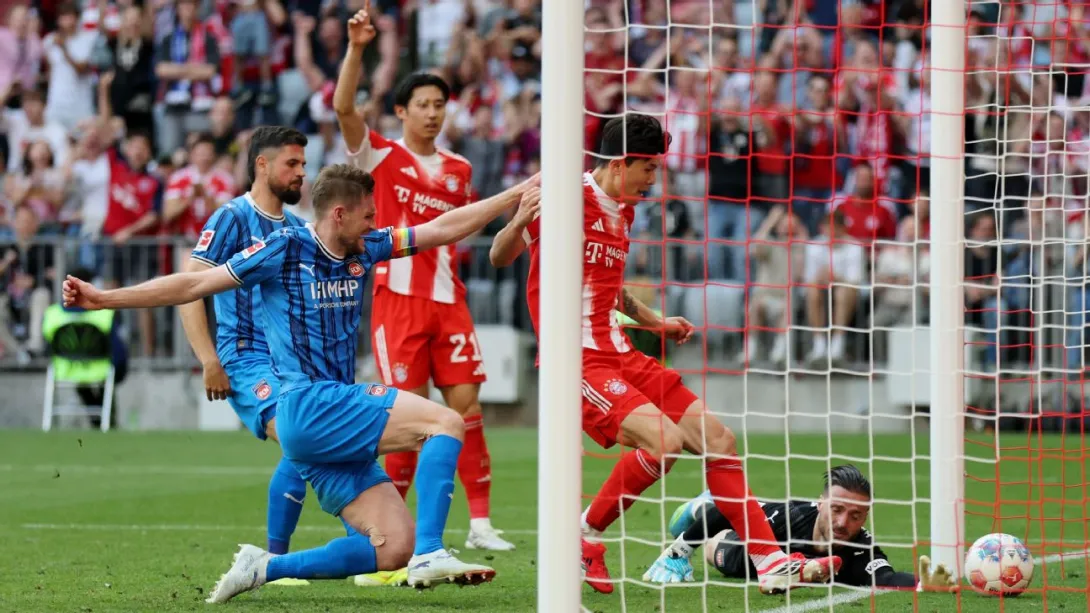
A heavily rotated FC Bayern Munich lineup, orchestrated by manager Vincent Kompany, faced early adversity against 1. FC Heidenheim after conceding from a set-piece lapse. Following a high-scoring UEFA Champions League semifinal clash against Paris Saint-Germain, Bayern rested key figures including Harry Kane. The reshuffled side struggled for cohesion, allowing Heidenheim to capitalize through Budu Zivzivadze. The development underscores the operational risks tied to squad rotation amid congested schedules and highlights the strategic trade-offs elite clubs must navigate.
Strategic Rotation Reflects Fixture Congestion
In the aftermath of an intense 5-4 defeat in the UEFA Champions League semifinal first leg, Vincent Kompany opted for sweeping changes to Bayern’s starting XI. Seven new players were introduced, signaling a deliberate attempt to manage fatigue and preserve key personnel for upcoming high-stakes fixtures.
Among those rested were Harry Kane and Michael Olise, two pivotal attacking assets. While the decision reflects long-term planning, it inevitably altered the team’s structural balance and rhythm.
Set-Piece Vulnerability Costs Bayern Early
Heidenheim’s opening goal stemmed from a defensive lapse following a corner. Bayern failed to clear decisively, allowing Marnon-Thomas Busch to recycle possession with a looping delivery back into the penalty area.
Positioned advantageously, Budu Zivzivadze reacted swiftly, guiding the ball past goalkeeper Jonas Urbig, with the effort finding the net via the post. The sequence exposed a lack of defensive cohesion, often a byproduct of extensive rotation.
Tactical Trade-Offs and Competitive Risk
Bayern’s approach highlights a recurring dilemma in elite football: balancing domestic commitments with European ambitions. While squad rotation is essential to mitigate fatigue and injury risk, it can disrupt tactical consistency, particularly in defensive organization.
Dropped points in league competition carry broader financial implications, potentially influencing prize allocations, broadcast revenues, and sponsorship valuations. As such, each fixture assumes significance beyond immediate results.
Heidenheim’s Efficient Execution
Heidenheim capitalized on Bayern’s transitional vulnerabilities with a disciplined and opportunistic approach. By maintaining defensive structure and maximizing set-piece situations, they demonstrated how strategic efficiency can offset disparities in squad depth and financial resources.
Such performances are critical for clubs aiming to secure stability and improve league standings, directly impacting revenue streams tied to final rankings.
Outlook: Bayern’s Response Under Scrutiny
As the match unfolds, Bayern’s ability to recalibrate will depend on tactical adjustments and potential reinforcements from the bench. The introduction of rested players could restore attacking fluency and defensive assurance.
For Vincent Kompany, the scenario underscores the complexities of modern squad management. Navigating a congested calendar without compromising performance remains a defining challenge, one that will shape Bayern’s domestic and European trajectory in the weeks ahead.
Comments