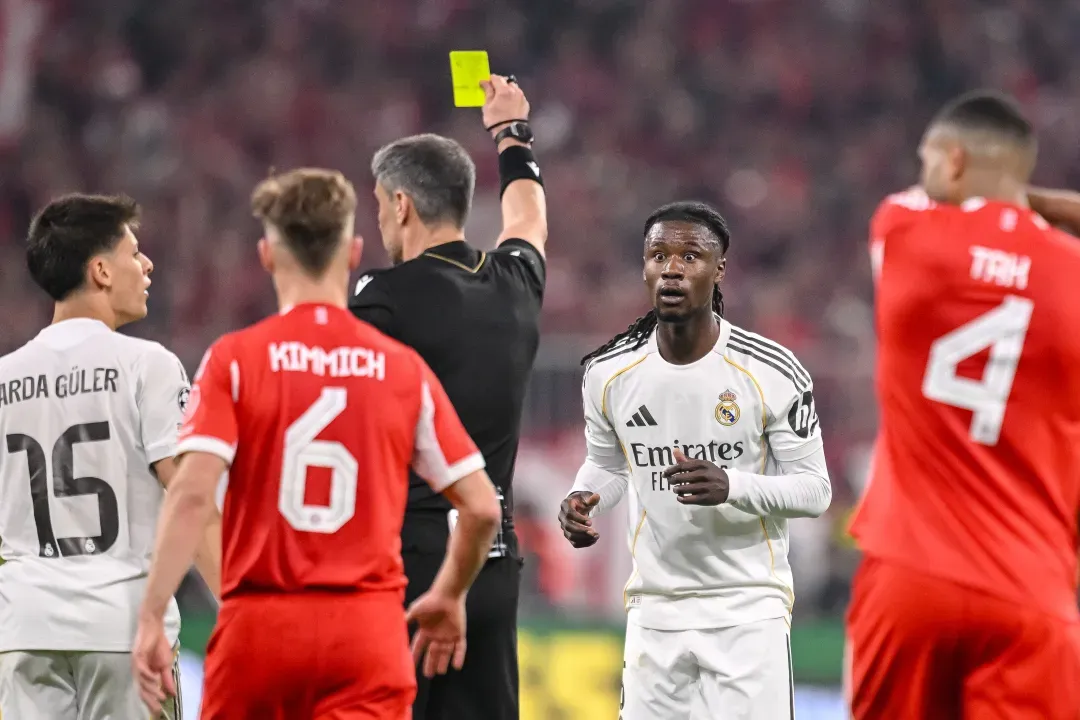
Bayern Munich’s elimination of Real Madrid from the UEFA Champions League represents a defining moment in European football, signaling a renewed phase of tactical maturity and competitive ambition under Vincent Kompany. The victory, unprecedented for a Bayern manager in over a decade in this context, reflects a blend of disciplined execution and strategic innovation. Beyond the immediate sporting impact, the result carries significant commercial and brand implications, reinforcing Bayern’s global standing. As emotions surge following the landmark win, the outcome underscores how leadership, preparation, and adaptability are reshaping competitive dynamics at the highest level of club football.
A Defining Night in European Competition
The victory of Bayern Munich over Real Madrid in the UEFA Champions League stands as one of the most significant results of the current season.
Defeating a club synonymous with European success not only advances Bayern’s campaign but also repositions the German side as a serious contender for continental supremacy. The result reflects a broader shift in competitive balance, where traditional powerhouses are increasingly challenged by evolving tactical systems.
Kompany’s Managerial Breakthrough
At the heart of this transformation is Vincent Kompany, whose leadership has delivered a milestone achievement. By guiding Bayern past Real Madrid, Kompany has accomplished a feat that had eluded several predecessors over the past decade.
His approach, rooted in structural discipline and controlled aggression, allowed Bayern to dictate key phases of play. The emphasis on compact defending combined with efficient transitions proved instrumental in neutralizing Madrid’s attacking threats.
Tactical Execution and On-Field Discipline
Bayern’s performance was defined by clarity of purpose and precision in execution. Against a side known for its resilience and ability to thrive under pressure, maintaining composure was critical.
The team’s ability to adhere to a well-defined tactical framework highlights the growing importance of system-based football. Every phase—from defensive organization to attacking transitions—was executed with calculated intent, reflecting meticulous preparation.
Economic and Brand Implications
Success in the UEFA Champions League carries substantial financial benefits. Advancing in the tournament enhances revenue through broadcasting rights, sponsorship deals, and global audience engagement.
For Bayern Munich, this victory strengthens its brand equity in international markets. High-profile wins against elite opponents like Real Madrid amplify visibility, attract commercial partnerships, and reinforce the club’s positioning as a global football powerhouse.
Emotional Impact and Fan Engagement
The emotional resonance of such a victory extends far beyond the pitch. Fans, stakeholders, and the broader football community view these moments as defining chapters in a club’s history.
In the digital era, heightened fan engagement translates into measurable economic value, from merchandise sales to social media traction. Bayern’s triumph is likely to generate sustained global interest, further enhancing its commercial footprint.
Conclusion: A Turning Point in Bayern’s European Campaign
Bayern Munich’s elimination of Real Madrid represents more than a single victory—it is a statement of strategic evolution and renewed ambition. Under Vincent Kompany, the club appears to be entering a phase defined by tactical sophistication and competitive resilience.
As the Champions League progresses, this result could serve as a catalyst for deeper success. In a tournament where momentum often dictates outcomes, Bayern’s landmark win positions them firmly among the frontrunners for European glory.
Comments