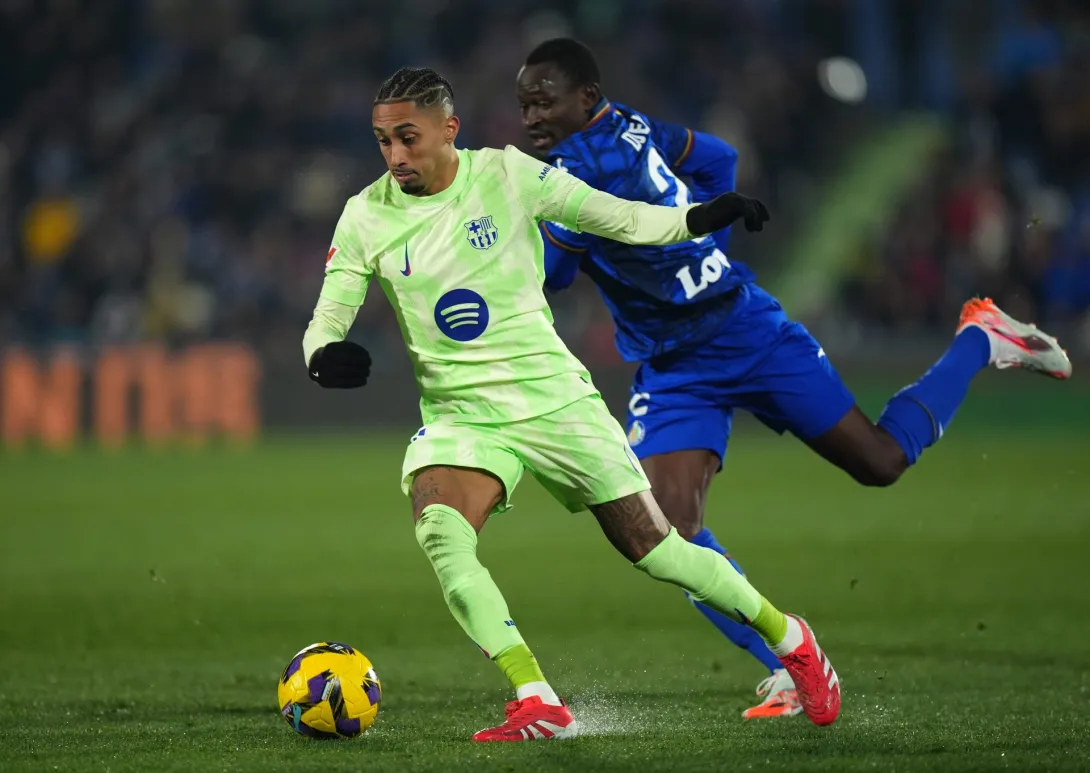
FC Barcelona are navigating a critical phase of the 2025/26 season without one of their most influential attackers, Raphinha, who has been sidelined since March due to his third injury of the campaign. The setback, sustained أثناء international duty with the Brazil national football team, has disrupted manager Hansi Flick’s tactical continuity. As fixtures intensify, Barcelona’s reliance on squad depth and adaptive strategy underscores the broader challenges of maintaining performance stability amid player unavailability in elite football’s high-pressure environment.
Injury at the Worst Possible Time
The absence of Raphinha has proven particularly costly for FC Barcelona, given the timing within the competitive calendar. The Brazilian forward’s third injury of the season, sustained while representing the Brazil national football team, has sidelined him during a period defined by congested fixtures and high-stakes encounters.
Repeated injuries within a single season often point to broader workload management challenges, especially for players balancing club responsibilities with international commitments. For Barcelona, the loss has been both immediate and strategic.
Tactical Disruption Under Hansi Flick
Manager Hansi Flick has been compelled to rethink his attacking structure in the absence of a player known for intensity, width, and creative output. Raphinha’s role extended beyond conventional wing play—he was central to pressing schemes and transitional phases.
Without him, Barcelona’s attacking fluidity has required recalibration. While replacements have attempted to fill the void, the absence of his specific skill set has inevitably altered the team’s offensive dynamics, impacting both chance creation and defensive pressing.
Depth Versus Dependence
The situation has reignited debate حول squad depth within FC Barcelona. Elite clubs are expected to maintain robust benches, yet the absence of a high-impact player often exposes structural dependencies.
Depth is not solely about numerical strength but about having players capable of replicating tactical roles with minimal disruption. In Raphinha’s case, his unique combination of pace, work rate, and technical ability makes direct replacement particularly challenging.
Financial and Competitive Ramifications
From a business standpoint, injuries to key players can have cascading effects. Performance dips may influence league standings, progression in tournaments, and ultimately revenue streams linked to broadcasting, sponsorships, and prize money.
For FC Barcelona, maintaining competitive consistency is critical not only for sporting objectives but also for preserving brand value in an increasingly commercialized football ecosystem.
The Road to Recovery and Strategic Adjustment
Looking ahead, Barcelona’s immediate priority lies in managing the squad effectively until Raphinha returns to full fitness. His reintegration will be crucial in restoring balance and intensity to the attacking unit.
In the interim, the club’s response will serve as a measure of its resilience. Elite teams are defined not by the absence of adversity, but by their capacity to adapt—and Barcelona’s handling of this challenge may well shape the trajectory of their season.
Comments