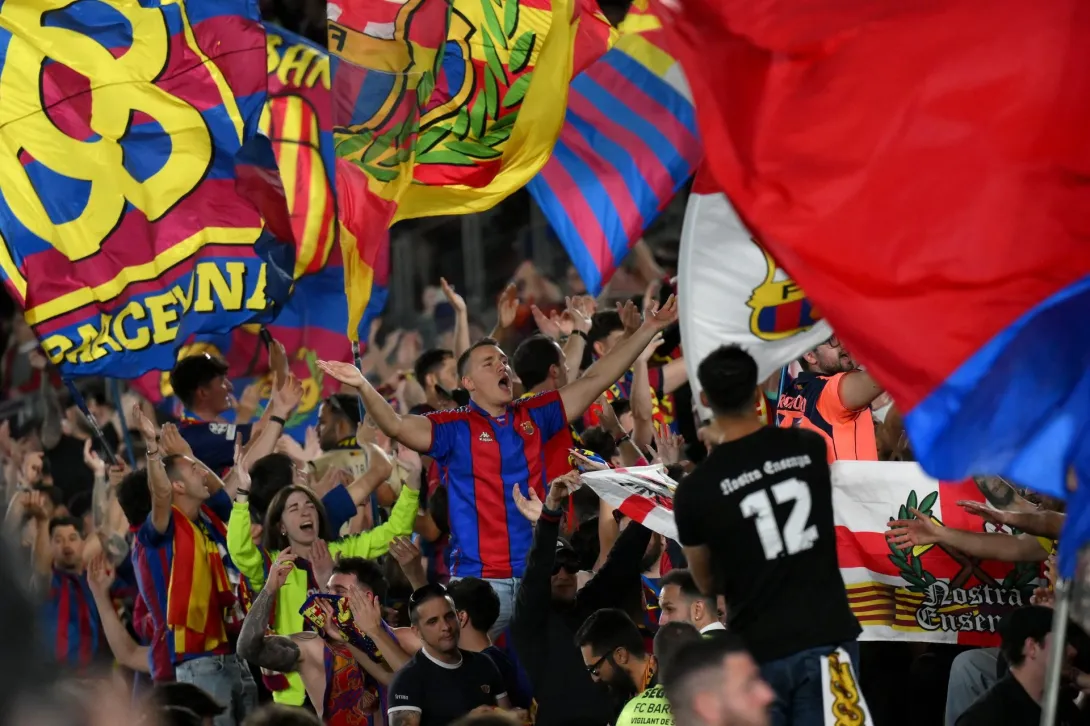
FC Barcelona reinforced its dominance in Spanish football with a commanding 2-0 victory over arch-rivals Real Madrid at Spotify Camp Nou, securing another major title under manager Hansi Flick. Goals from Marcus Rashford and Ferran Torres sealed the triumph in an emotionally charged El Clasico that carried both sporting and financial significance. Beyond lifting the fifth trophy of the Flick era, Barcelona reportedly generated record-breaking revenue from the fixture, highlighting the growing commercial scale of elite football rivalries. The result underscored Barcelona’s resurgence as both a competitive powerhouse and a financially revitalized global sports institution.
Barcelona Delivers a Statement Victory Against Real Madrid
The latest edition of El Clasico offered another reminder of why the rivalry between FC Barcelona and Real Madrid remains one of the most commercially and emotionally significant spectacles in global sport.
Entering the contest at Spotify Camp Nou needing only a draw to mathematically secure the title, Barcelona instead opted for authority over caution. The Catalan giants defeated Madrid 2-0 in a performance defined by tactical discipline, attacking efficiency, and composure under pressure.
Marcus Rashford opened the scoring with a clinical finish that shifted momentum decisively in Barcelona’s favor, before Ferran Torres added a second goal to extinguish any hopes of a Madrid comeback.
The victory secured the fifth trophy of the Hansi Flick era, further validating the German coach’s impact since assuming leadership of the club.
Hansi Flick’s Barcelona Project Gains Momentum
Barcelona’s latest triumph represents more than another addition to the club’s trophy cabinet. It also reflects the accelerating success of Flick’s broader rebuilding project.
After years marked by financial instability, managerial turnover, and inconsistent performances, Barcelona now appears to have rediscovered structural clarity both on and off the pitch. Flick has introduced a system built around disciplined pressing, fluid attacking transitions, and positional control — a tactical identity increasingly visible in high-pressure fixtures.
The victory over Madrid demonstrated the maturity of that approach. Barcelona controlled key phases of the game with composure while simultaneously neutralizing Madrid’s attacking threats.
Analysts across European football have increasingly pointed to Flick’s ability to blend experienced international talent with emerging players into a cohesive competitive unit. The result has been a more balanced squad capable of sustaining performance across multiple competitions.
Record Revenue Highlights Football’s Expanding Commercial Scale
The significance of the evening extended well beyond the final whistle. According to reports from Spanish publication AS, Barcelona also generated record-breaking revenue from the El Clasico encounter, reinforcing the extraordinary economic value attached to modern football’s biggest rivalries.
The fixture once again demonstrated how elite football clubs operate as global entertainment enterprises rather than merely sporting institutions. Revenue streams tied to El Clasico now extend across broadcasting rights, premium hospitality, sponsorship activation, digital engagement, ticket sales, merchandise, and international tourism.
For Barcelona, the financial milestone carries particular importance. The club has spent recent seasons attempting to stabilize its balance sheet amid mounting debt concerns and financial restructuring initiatives.
Record matchday earnings therefore represent both symbolic and operational progress. Strong commercial performance strengthens Barcelona’s capacity to manage wage structures, invest in infrastructure, and remain competitive in an increasingly aggressive European football market.
Spotify Camp Nou Emerges as a Commercial Asset
The modernization and commercialization of Spotify Camp Nou have transformed the stadium into one of football’s most valuable revenue-generating venues.
Large-scale attendance figures combined with premium fan experiences and corporate hospitality offerings have significantly enhanced Barcelona’s matchday economics. El Clasico, in particular, has evolved into a global entertainment event attracting sponsors, tourists, and broadcasters from across international markets.
Industry experts note that top-tier football clubs increasingly view stadium infrastructure as strategic financial assets capable of generating year-round commercial returns beyond traditional ticket sales.
Barcelona’s ability to maximize the economic potential of marquee fixtures reflects a broader transformation underway across European football, where operational sophistication is becoming as important as sporting excellence.
Real Madrid Faces Strategic Questions After Defeat
For Real Madrid, the defeat raised renewed questions about tactical consistency and squad evolution.
Despite entering the match with an opportunity to disrupt Barcelona’s celebrations, Madrid struggled to establish sustained control throughout the contest. Defensive vulnerabilities and inconsistent attacking cohesion limited the club’s ability to respond after conceding the opening goal.
The performance is likely to intensify discussions surrounding future recruitment priorities, midfield balance, and long-term squad planning. With European football becoming increasingly competitive both financially and tactically, even elite institutions such as Madrid face constant pressure to evolve.
Nevertheless, the rivalry’s enduring global appeal remains intact. El Clasico continues to generate extraordinary worldwide engagement because it represents the intersection of sporting prestige, historical legacy, and commercial power.
Global Football’s Business Model Continues to Evolve
Barcelona’s latest success offers insight into the evolving economics of modern football. Major rivalries are no longer confined to local or national audiences; they now function as international media products capable of generating billions in commercial value.
Streaming platforms, digital fan ecosystems, and global sponsorship networks have dramatically expanded the financial reach of elite football clubs. Competitive success increasingly drives commercial growth, while commercial growth simultaneously enables further competitive investment.
For Barcelona, the convergence of sporting dominance and record financial performance signals a critical moment in the club’s broader recovery strategy.
The night at Spotify Camp Nou ultimately delivered more than a trophy celebration. It illustrated how the world’s biggest football institutions must now operate simultaneously as elite sporting organizations, entertainment brands, and multinational commercial enterprises in order to maintain long-term relevance and dominance.
Comments