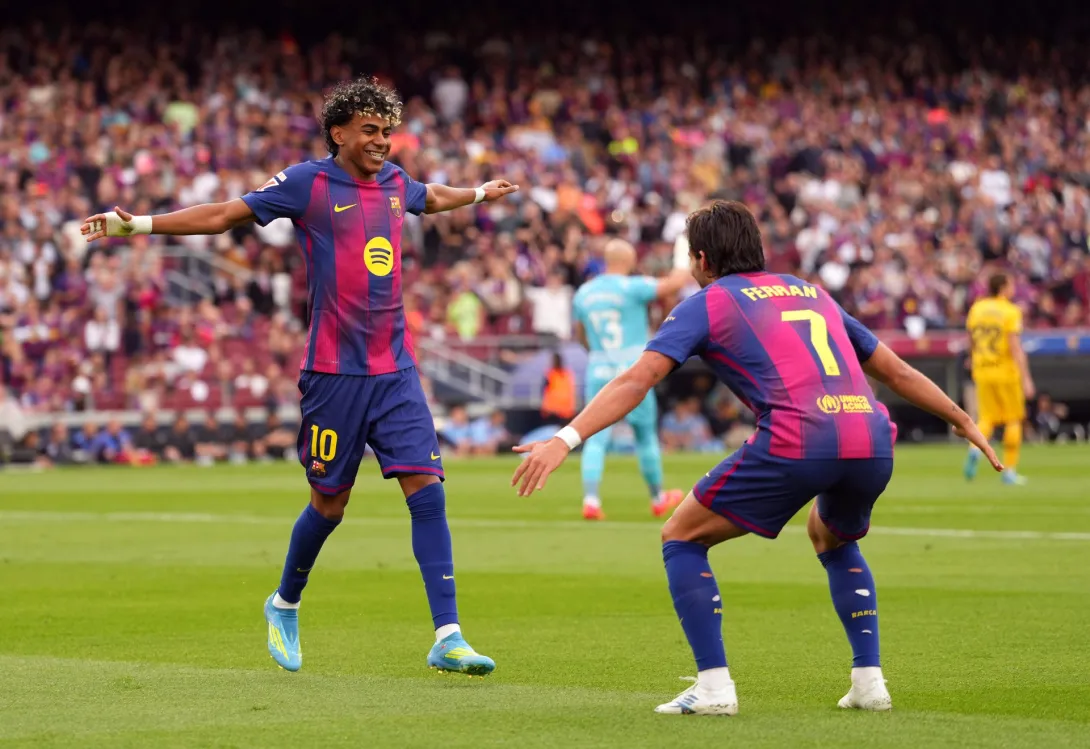
FC Barcelona have unveiled a psychologically driven approach ahead of their high-stakes UEFA Champions League quarter-final clash with Atlético Madrid, emphasizing unity and belief as core pillars of preparation. Through a symbolic “Believe” campaign inspired by Ted Lasso, the club has reinforced a culture of collective confidence within the squad. Manager Hansi Flick has actively championed this initiative, highlighting the growing importance of psychological readiness in elite sport. The strategy reflects a broader shift toward integrating mental conditioning with performance execution in high-pressure competitions.
A Symbolic Message with Strategic Intent
FC Barcelona have signaled a clear mental framework ahead of their निर्णायक UEFA Champions League encounter against Atlético Madrid. In the build-up to the quarter-final second leg, the club disseminated a succinct yet powerful message across its social media channels: “Believe.”
Accompanied by the phrase “believe to feel alive,” the messaging reflects a deliberate effort to cultivate resilience and optimism within the squad during a critical phase of the season.
Cultural Inspiration and Dressing Room Dynamics
The campaign draws inspiration from the globally popular series Ted Lasso, known for its emphasis on leadership, unity, and emotional intelligence in sports settings. Mirroring the show’s iconic symbolism, Barcelona have installed a “Believe” poster inside their dressing room.
Players have been observed placing their hands on the poster, a gesture that reinforces solidarity and shared purpose. This ritualistic act underscores the importance of team cohesion in navigating high-pressure situations.
Leadership Influence and Managerial Philosophy
Manager Hansi Flick has played a pivotal role in embedding this collective mindset. His presence during these moments highlights a leadership style that extends beyond tactical instruction to encompass psychological conditioning.
In modern elite football, such leadership approaches are increasingly vital. Managers are expected not only to devise game plans but also to cultivate mental resilience and emotional alignment within their squads.
Psychological Capital in Modern Football
The integration of psychological strategies into performance frameworks has become a defining feature of contemporary sports management. Confidence, belief, and emotional stability often determine outcomes in tightly contested matches.
Barcelona’s initiative reflects this evolution, positioning mental strength as a competitive asset. By fostering a belief-driven culture, the club aims to enhance player performance under pressure and improve decision-making in critical moments.
Commercial and Brand Dimensions
Beyond the sporting context, campaigns like “Believe” contribute to brand storytelling and fan engagement. Emotional narratives resonate strongly with global audiences, strengthening loyalty and digital interaction.
For FC Barcelona, such initiatives support a commercial ecosystem valued in multi-million euros (Rs. equivalent), encompassing sponsorships, merchandise, and media rights. The alignment of performance and branding strategies enhances overall organizational value.
Strategic Outlook: Translating Belief into Performance
While symbolic messaging can inspire, its effectiveness ultimately depends on on-field execution. Barcelona must translate this मानसिक framework into disciplined, high-quality performance against a tactically robust opponent.
Against Atlético Madrid, the integration of belief, strategy, and execution will be critical in determining the outcome of the tie.
Conclusion
FC Barcelona’s “Believe” campaign underscores a sophisticated understanding of modern sports dynamics, where psychological readiness complements tactical expertise. As the team approaches a defining fixture, this emphasis on unity and confidence could prove decisive. In a competition where margins are razor-thin, belief—when effectively harnessed—may serve as the catalyst for success.
Comments