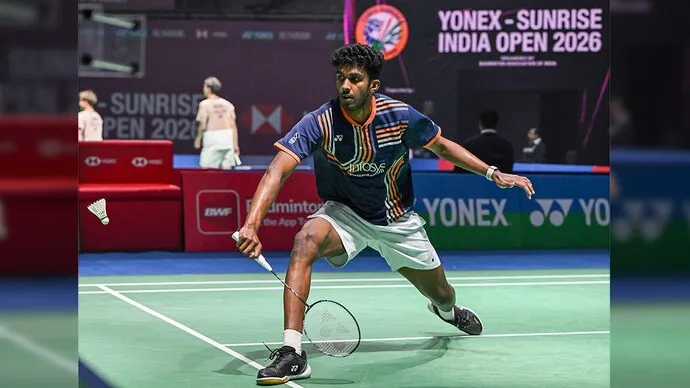
India’s badminton ecosystem has found a compelling new contender in Ayush Shetty, whose breakthrough run to the final of the Badminton Asia Championships signals a shift in the country’s competitive depth. At just 20, the Karnataka athlete became the first Indian in 61 years to reach a men’s singles final at the prestigious event. Endorsed by global champion Viktor Axelsen and Olympic medallist P. V. Sindhu, Shetty’s rise underscores the growing effectiveness of India’s talent development systems and its expanding influence in international badminton.
A Historic Breakthrough on the Asian Stage
Ayush Shetty’s performance in Ningbo represents a defining milestone for Indian badminton. His progression to the final of the Badminton Asia Championships ended a six-decade-long absence of Indian representation in the men’s singles title clash.
Competing against Asia’s elite, Shetty displayed a blend of technical finesse and mental resilience. His ability to navigate high-pressure situations and maintain consistency throughout the tournament reflects a maturity beyond his years.
Recognition from Global Icons
Shetty’s rapid rise has not gone unnoticed by the sport’s leading figures. Two-time Olympic champion Viktor Axelsen has drawn parallels between Shetty’s current trajectory and his own formative years, pointing to the Indian’s strong fundamentals and tactical awareness.
Meanwhile, P. V. Sindhu has described him as a “generational talent,” emphasizing his natural ability and potential to compete at the highest level. Such endorsements enhance not only Shetty’s credibility but also his commercial appeal in a competitive sports market.
Institutional Backbone and Training Excellence
A key factor behind Shetty’s emergence is the structured training environment provided by the Prakash Padukone Badminton Academy. Under the guidance of experienced coaches, including Sagar Chopda, Shetty has developed a well-rounded game that combines agility, precision, and strategic intelligence.
This reflects a broader evolution in India’s sports infrastructure, where targeted investments in coaching and high-performance systems are producing globally competitive athletes.
Commercial and Strategic Implications
From a business standpoint, Shetty’s success contributes to the growing valuation of badminton as a commercial sport in India. Rising stars attract sponsorships, boost media engagement, and inspire grassroots participation.
The emergence of new talent also diversifies India’s sporting portfolio, reducing over-reliance on a handful of established names. This, in turn, strengthens the sport’s long-term sustainability and enhances its appeal to investors and stakeholders.
Future Outlook: Sustaining Momentum
While Shetty’s achievement marks a significant breakthrough, the path ahead demands consistency and adaptability. Transitioning from a promising talent to a top-tier global competitor will require sustained performance across international circuits.
For Indian badminton, his rise represents more than individual success—it signals a deepening talent pool and a system increasingly capable of producing world-class athletes. If nurtured effectively, Ayush Shetty could become a cornerstone of India’s ambitions on the global badminton stage.
Comments