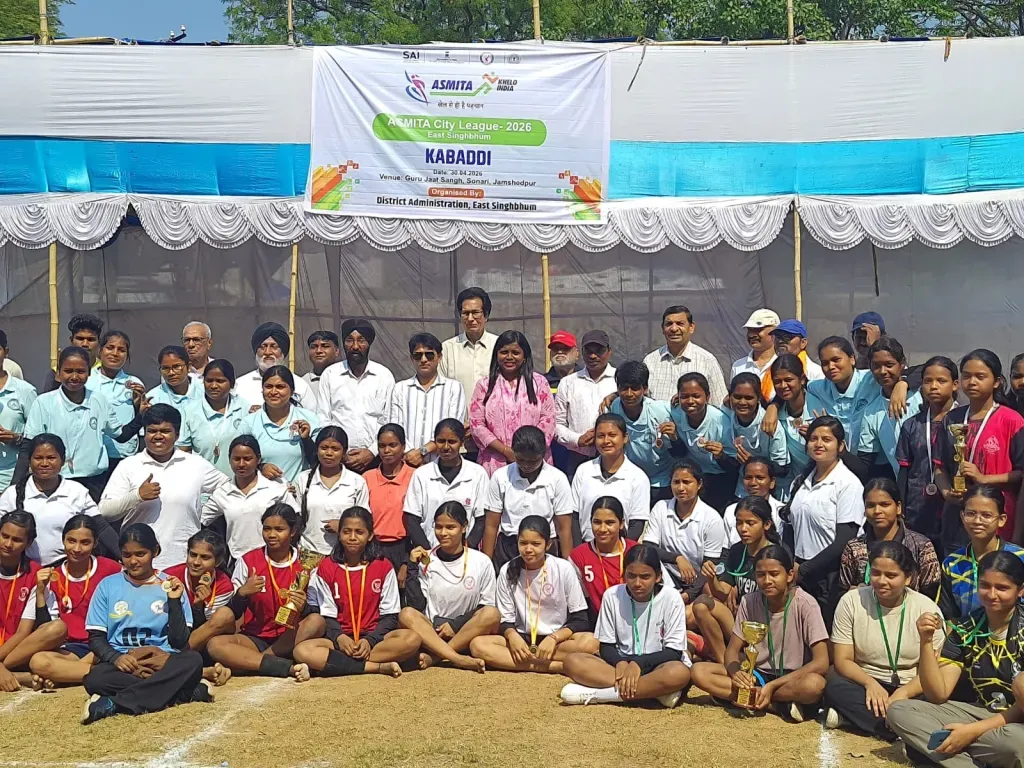
The Asmita City League 2026 concluded with a vibrant display of grassroots talent at Guru Jat Sangh Sonari, reinforcing India’s commitment to developing women’s sports. Conducted under the aegis of the District Administration (Sports Wing), East Singhbhum, and aligned with the Ministry of Youth Affairs and Sports and Khelo India program, the event featured 10 teams and approximately 140 participants. The competition highlighted structured talent development, institutional backing, and increasing participation, signaling long-term growth potential within India’s emerging women’s kabaddi ecosystem.
Event Overview: Grassroots Momentum Gains Strength
The Asmita City League 2026 concluded on a high note, bringing together young athletes in a competitive kabaddi environment designed to nurture emerging talent. Hosted at Guru Jat Sangh Sonari, the event demonstrated the growing reach of organized sports initiatives at the district level.
Participation from 10 teams, comprising around 140 girls, reflects a steady rise in engagement and accessibility. Such tournaments are increasingly becoming foundational platforms for talent identification and skill development.
Institutional Framework: Policy Driving Participation
The competition was organized in alignment with the Ministry of Youth Affairs and Sports and the Khelo India initiative, underscoring the role of policy-driven frameworks in expanding sports participation.
Government-backed programs have played a pivotal role in enhancing infrastructure, funding, and organizational capabilities. These efforts are gradually transforming grassroots sports into structured ecosystems capable of producing competitive athletes.
Competition Results: Emerging Champions Across Categories
In the Under-17 category, Dayanand Public School, Jamshedpur secured first place, demonstrating consistent performance and tactical discipline. Kerala Public School, Jamshedpur finished second, while Vivek Vidyalaya, Jamshedpur claimed third position.
In the Above-17 category, Guru Jat Sangh, Sonari emerged as champions, followed by Ghatshila in second place. Jamshedpur Women’s University completed the podium with a third-place finish.
These results highlight both competitive balance and the depth of talent across participating institutions.
Talent Development: Building a Sustainable Pipeline
Grassroots competitions such as the Asmita City League serve as critical entry points for young athletes. By providing structured exposure to competitive environments, these events enable players to refine technical skills and develop psychological resilience.
From a strategic standpoint, such initiatives function as feeder systems, ensuring a steady pipeline of talent for higher-level competitions. This long-term approach is essential for sustaining national competitiveness.
Economic and Social Impact: Expanding the Sports Ecosystem
The rise of women’s kabaddi carries broader socio-economic implications. Increased participation not only promotes inclusivity but also opens avenues for sponsorship, media visibility, and investment.
As the ecosystem matures, financial flows into sports—often measured in crores (Rs.) at professional levels—are likely to extend toward grassroots development. This creates a virtuous cycle of growth, benefiting athletes, institutions, and local communities.
Strategic Outlook: Sustaining Growth Through Investment
The success of the Asmita City League underscores the importance of continued investment in grassroots infrastructure and training programs. Collaboration between government bodies, educational institutions, and local organizations will be key to maintaining momentum.
By integrating competitive exposure with structured training and financial support, stakeholders can accelerate the development of women’s kabaddi and strengthen India’s position in the global sporting landscape.
Conclusion: A Foundation for Future Excellence
The conclusion of the Asmita City League 2026 marks a significant step forward in the evolution of women’s kabaddi at the grassroots level. With strong participation, competitive outcomes, and institutional backing, the event reflects a promising trajectory for the sport.
As India continues to prioritize sports development, initiatives like this will play a central role in bridging the gap between grassroots participation and elite performance, laying the foundation for sustained success.
Comments