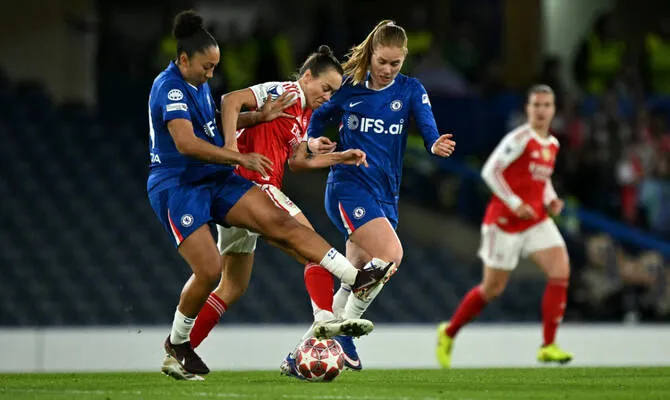
In a high-stakes UEFA Women’s Champions League quarterfinal, Arsenal WFC overcame Chelsea WFC in a match that showcased tactical mastery and individual brilliance. Arsenal’s disciplined defense, rapid transitions, and clinical finishing proved decisive against Chelsea’s traditionally formidable lineup. The victory not only propels Arsenal into the semifinals but also carries significant financial implications, including prize money, increased broadcasting revenue, and enhanced sponsorship exposure. Analysts highlight that such wins elevate fan engagement and brand equity, underscoring the intersection of sporting excellence and commercial strategy in elite women’s club football.
Tactical Mastery on Display
Arsenal WFC implemented a strategically disciplined game plan, blending measured possession with swift counterattacks. Midfielders maintained tempo control while forwards exploited spaces with precision, culminating in decisive goal-scoring opportunities.
Chelsea WFC, despite fielding a technically proficient squad, struggled to breach Arsenal’s defensive cohesion. Analysts credit Arsenal’s effective pressing, quick ball circulation, and exploitation of set-piece scenarios as critical factors in their success, reflecting the increasingly professional and analytical approach to women’s European club football.
Financial and Commercial Implications
Advancement to the semifinals ensures a substantial financial windfall for Arsenal, with projected prize money of approximately Rs. 8–10 crore at this stage. Broadcast rights, digital subscriptions, and sponsorship activations further contribute to revenue growth.
Investment in squad depth, tactical coaching, and data analytics infrastructure correlates directly with competitive success, highlighting the strategic interplay between on-field performance and financial returns in top-tier women’s football.
Enhancing Brand Equity and Fan Engagement
The high-profile victory boosts Arsenal’s global visibility, engaging both domestic and international fan bases. Social media traction, merchandise sales, and live-stream viewership are expected to rise significantly. Analysts predict that such performance-driven engagement can increase sponsorship valuations and digital monetization by up to 20–25%, demonstrating the commercial impact of elite sporting achievement.
Outlook and Strategic Significance
Arsenal’s progression to the semifinals strengthens their position as a leading contender for the UEFA Women’s Champions League title. Continued focus on tactical innovation, player development, and market engagement will be essential to sustain both competitive momentum and financial performance.
This quarterfinal result exemplifies the convergence of athletic prowess and strategic business planning, highlighting the evolving sophistication and commercial potential of women’s professional football in Europe.
Comments