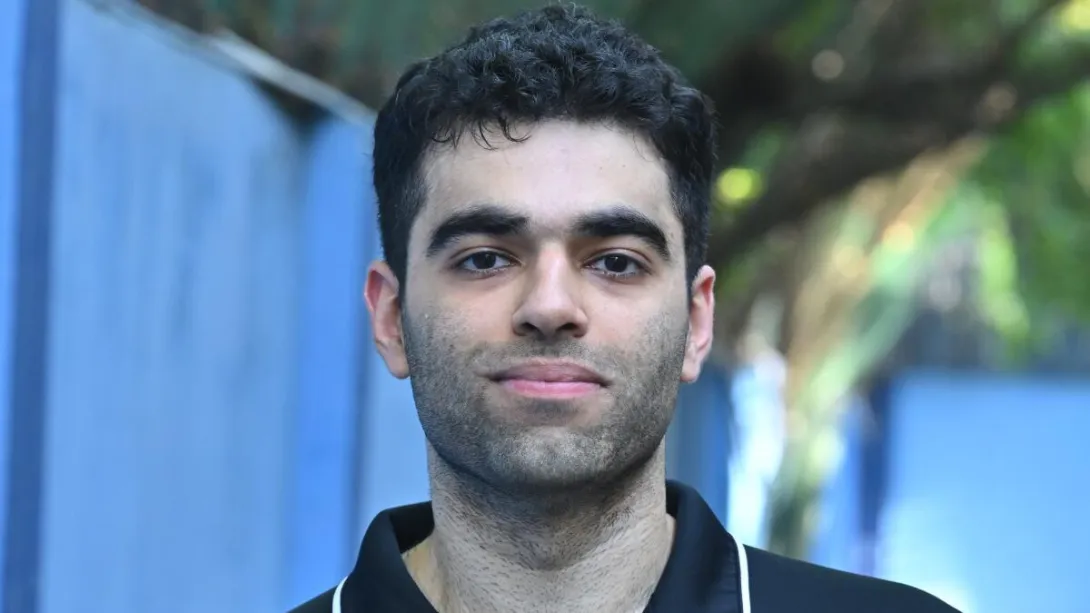
India’s campaign at the Hamburg Open delivered a blend of promise and disappointment, as Veer Chotrani advanced to the quarterfinals with a dominant straight-games victory, while several top compatriots suffered early exits. Ranked World No. 47, Chotrani showcased composure and tactical precision against Germany’s Raphael Kandra, reinforcing his growing stature on the PSA circuit. However, defeats for Abhay Singh, Ramit Tandon, and Joshna Chinappa underscored inconsistencies within India’s professional squash ranks. The results highlight both the emergence of new talent and the challenges of sustaining competitive performance in increasingly demanding international tournaments.
Chotrani’s Commanding Win Signals Upward Momentum
India’s Veer Chotrani delivered a clinical performance in the men’s second round of the Hamburg Open, defeating Germany’s eighth seed Raphael Kandra in straight games. The 11-8, 11-7, 11-7 victory reflected Chotrani’s superior control, efficient shot selection, and ability to dictate rallies.
The result marks a significant milestone for the Indian, whose steady climb in global rankings has been underpinned by consistent performances at PSA events. His progression into the quarterfinals reinforces his credentials as one of India’s emerging forces in international squash.
Early Exits Highlight Competitive Pressures
Despite Chotrani’s success, India’s overall campaign faced setbacks. Fifth seed Abhay Singh and seventh seed Ramit Tandon both exited in the second round, falling short of expectations in a tournament where their seeding suggested deeper runs.
In the women’s draw, seasoned campaigner Joshna Chinappa, a former World No. 10, also bowed out at the same stage. Her elimination highlights the intensifying competition on the global circuit, where even experienced players face minimal margin for error.
Hamburg Open’s Strategic Importance in the PSA Circuit
The Hamburg Open, classified as a PSA Bronze-level event, serves as a critical platform for players seeking to accumulate ranking points and gain international exposure. While the prize pool may be modest compared to elite-tier tournaments, its competitive field ensures high-quality match play.
For rising players like Chotrani, such tournaments are essential stepping stones toward higher-tier events. Strong performances not only enhance rankings but also improve seeding positions, creating a virtuous cycle of opportunity and progression.
Performance Gaps and Structural Considerations
The contrasting outcomes for Indian players in Hamburg reflect a broader structural narrative. While the talent pipeline remains robust, consistency at the international level continues to be a challenge. Variability in performance, particularly in early rounds, suggests the need for enhanced focus on mental conditioning, match preparedness, and tactical adaptability.
From a developmental perspective, sustained investment in coaching infrastructure, sports science, and international exposure will be critical. As the global standard of squash rises, incremental gains will need to be replaced by systemic improvements.
Conclusion
Veer Chotrani’s advancement to the quarterfinals offers a positive signal for Indian squash, demonstrating the potential of the next generation to compete effectively on the global stage. However, the early exits of other leading players underscore the depth and intensity of international competition. As India seeks to strengthen its foothold in the sport, balancing emerging success with consistent execution will remain the defining challenge.
Comments