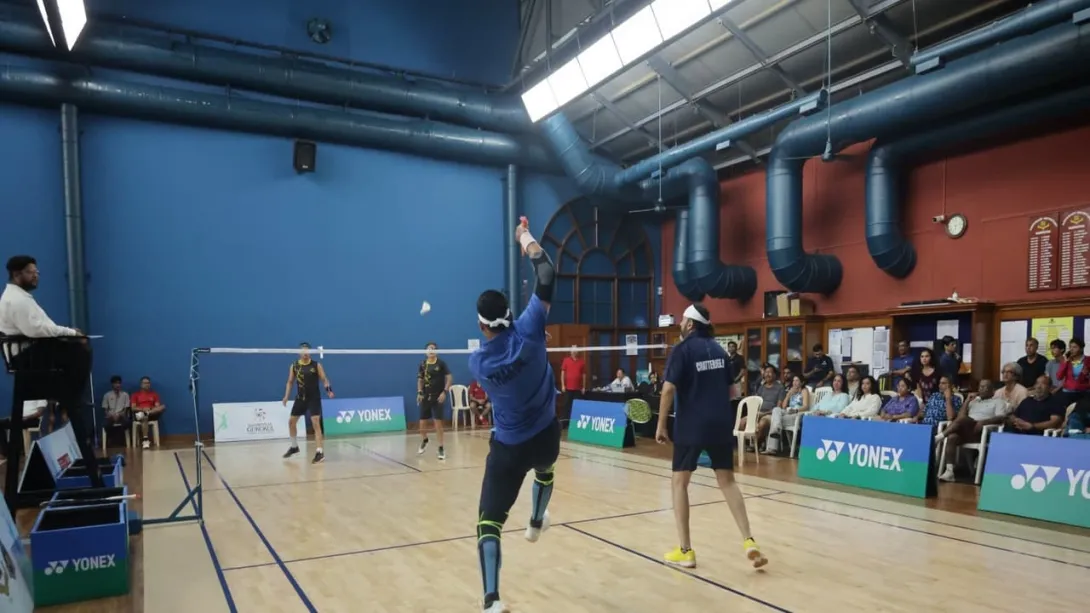
The semi-finals of the GD Birla Memorial Masters Inter-Club Badminton Tournament delivered a wave of unexpected outcomes as top-seeded players exited the competition at Bombay Gymkhana. In the women’s 45+ category, leading contenders Priya Ambekar and Namita Mehta-Vijayakar were eliminated in contrasting matches. While Ambekar suffered a straight-games defeat to Pooja Jhalani, Namita extended her contest to three games before falling short. The results highlight the growing competitiveness and unpredictability within India’s veteran badminton circuit.
A Semi-Final Stage Marked by Upsets
The GD Birla Memorial Masters Inter-Club Badminton Tournament witnessed a dramatic shift in momentum during its semi-final stage, with several seeded players unable to maintain their expected dominance. Hosted at the Bombay Gymkhana, the event underscored the increasing depth of competition in veteran categories.
Such outcomes reflect a broader trend in competitive sport, where ranking alone no longer guarantees progression, and match-day execution plays a decisive role.
Top Seeds Exit Under Pressure
Top seed Priya Ambekar faced a challenging contest against Pooja Jhalani, ultimately losing 6-21, 13-21 in a one-sided encounter. Jhalani’s commanding performance highlighted her tactical precision and ability to dictate play from the outset.
In contrast, second seed Namita Mehta-Vijayakar showcased resilience, pushing her opponent to three games. After losing the opening game, she rallied to level the match before conceding the decider 14-21, 21-15, 11-21. Despite the defeat, her performance reflected competitive grit and adaptability.
Competitive Parity in Veteran Badminton
The elimination of both top seeds points to a growing parity within the veteran badminton ecosystem. Players in the 45+ category are increasingly maintaining high standards of fitness, technique, and strategic awareness, narrowing the gap between seeded and unseeded competitors.
This evolution enhances the overall quality of tournaments, making them more dynamic and less predictable.
Tactical Execution as a Differentiator
From a performance perspective, the results emphasize the importance of tactical execution. Pooja Jhalani’s straight-games victory suggests a well-structured game plan, while the extended battle in Namita’s match highlights the fine margins that often determine outcomes.
In competitive settings, especially at advanced age-group levels, the ability to adapt mid-match can be as critical as physical endurance.
Broader Implications for the Sporting Ecosystem
Veteran tournaments, while operating on a smaller commercial scale compared to elite international events, play a vital role in sustaining the sport’s ecosystem. They encourage continued participation, foster community engagement, and provide competitive platforms across age groups.
Such events contribute to the long-term health of badminton in India by promoting inclusivity and maintaining visibility beyond the professional circuit.
Unpredictability Drives Engagement
The semi-final outcomes reinforce a key principle in sport: unpredictability fuels engagement. Upsets not only reshape tournament narratives but also create opportunities for emerging contenders to step into the spotlight.
As the tournament progresses, the focus will shift to those who can capitalize on this momentum, demonstrating that success in modern badminton is increasingly defined by adaptability, preparation, and execution under pressure.
Comments