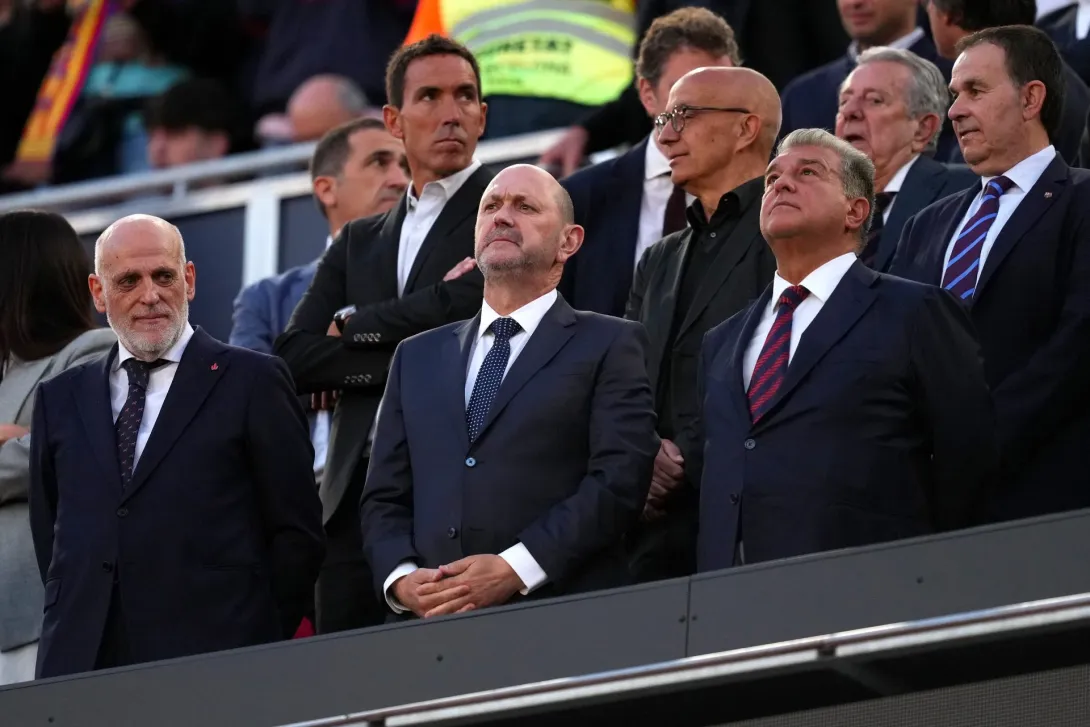
FC Barcelona secured the La Liga title in emphatic style after defeating long-time rivals Real Madrid CF 2-0 at the Spotify Camp Nou. The victory not only confirmed Barcelona’s return to domestic supremacy but also symbolised the club’s broader institutional resurgence following years of financial turbulence and competitive rebuilding. Celebrations across the stadium were accompanied by reactions from prominent figures within Spanish football, including Javier Tebas, who attended the match and publicly congratulated the club afterward. The result reinforced Barcelona’s commercial and sporting significance while underlining the enduring global appeal of Spanish football’s most iconic rivalry.
Barcelona Deliver Statement Performance on Historic Night
The atmosphere inside the Spotify Camp Nou reflected the scale of the occasion as FC Barcelona entered the decisive encounter with an opportunity to seal the championship against their fiercest rivals.
Barcelona responded with authority, controlling key phases of the contest and securing a 2-0 victory over Real Madrid CF to officially clinch the La Liga crown.
Winning the title against Real Madrid added historic and symbolic weight to the achievement. In Spanish football, few moments carry greater emotional and institutional significance than triumphing over a direct rival in a championship-deciding fixture.
The scenes after the final whistle reflected a release of collective emotion from supporters who have endured years of uncertainty surrounding the club’s sporting direction and financial stability.
Javier Tebas’ Presence Adds Institutional Significance
Among the notable figures present at the stadium was Javier Tebas, whose attendance highlighted the broader importance of the occasion for Spanish football’s governing and commercial ecosystem.
Following the final whistle, Tebas publicly congratulated Barcelona, a gesture widely interpreted as recognition of the club’s importance to the international visibility and commercial strength of the La Liga brand.
Barcelona’s revival arrives at a strategically critical period for Spanish football, which continues to compete aggressively with Europe’s other elite leagues for broadcasting revenue, sponsorship investment, and global audience share.
Industry analysts frequently note that the competitive strength of Barcelona and Real Madrid remains central to La Liga’s international marketability and long-term financial positioning.
Title Reflects Barcelona’s Broader Recovery
The championship carries implications extending well beyond sporting success. Over recent seasons, FC Barcelona has faced significant financial pressure, including debt restructuring, wage management challenges, and operational reforms aimed at restoring institutional stability.
Securing the league title enhances the club’s commercial leverage across several areas, including sponsorship negotiations, merchandising, ticketing demand, and global fan engagement.
Success on the field often acts as a catalyst for broader economic recovery within elite football institutions, particularly in a market where sporting relevance directly influences commercial valuation.
Barcelona’s ability to reclaim domestic dominance while undergoing structural rebuilding may therefore strengthen investor confidence and reinforce the club’s strategic recovery narrative.
Real Madrid Confront Difficult Questions
For Real Madrid CF, the defeat represented a disappointing conclusion to the title race and intensified scrutiny surrounding the team’s domestic consistency.
Although Madrid remain one of the world’s most financially powerful and commercially influential football institutions, the loss exposed tactical vulnerabilities during one of the season’s most critical fixtures.
Observers pointed to Barcelona’s superior control of tempo and momentum as decisive factors in the outcome. However, analysts also stressed that rivalries of this scale tend to evolve cyclically, with competitive dominance frequently shifting between the two clubs across different eras.
El Clásico Reinforces Global Power of Spanish Football
The title-deciding clash once again demonstrated why encounters between FC Barcelona and Real Madrid CF remain among the most commercially valuable spectacles in global sport.
Beyond the football itself, El Clásico functions as a cultural and economic phenomenon capable of attracting worldwide television audiences, premium sponsorship agreements, and extraordinary digital engagement.
For Barcelona, the night represented validation of a rebuilding project that many had questioned. For Spanish football, it served as a reminder that the La Liga continues to possess the narrative power, institutional prestige, and global appeal necessary to compete at the highest level of the international sports economy.
Comments