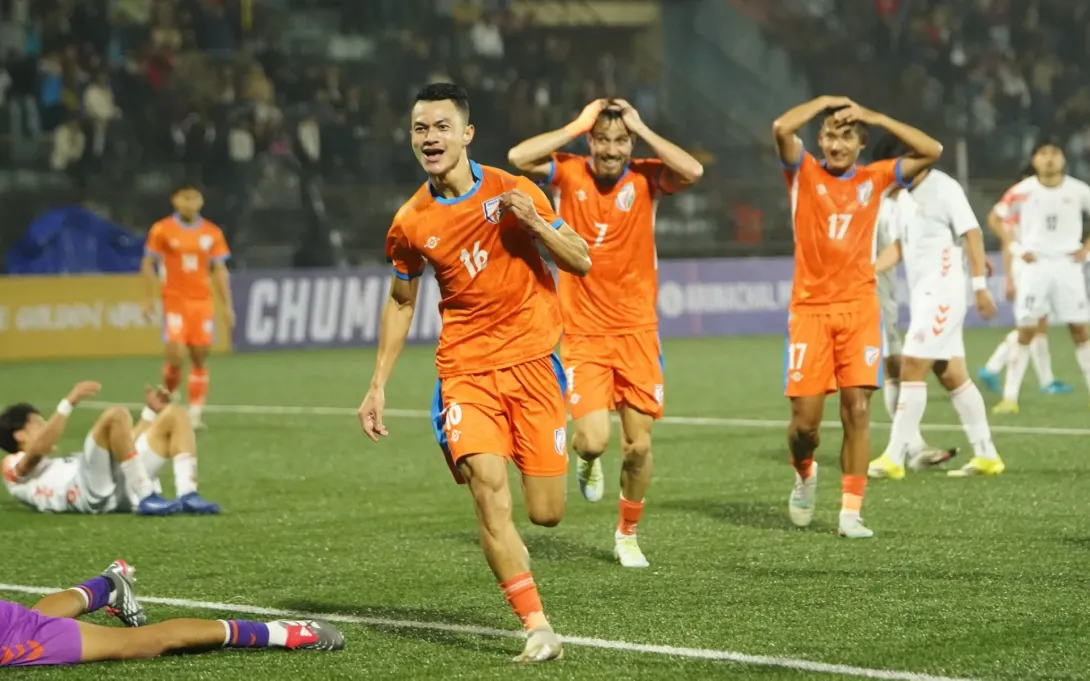
India’s youth football team, widely regarded as pre-match favourites, fell short in the tournament final against Tajikistan after conceding an early goal and failing to recover. Midfielder Khaitov Azizbek struck in the ninth minute, putting India on the back foot. Despite controlling stretches of the match and creating multiple opportunities, the Indian side struggled with cohesion in midfield and inefficiency in attack. Tajikistan, while missing chances to extend their lead, held firm defensively. The result underscores the importance of tactical discipline and execution in high-pressure matches, particularly for emerging teams seeking consistency on the international stage.
Early Setback Shapes the Final Outcome
The match began with unexpected intensity as Tajikistan seized the initiative early. Khaitov Azizbek capitalized on a defensive lapse to score within the opening ten minutes, immediately shifting the momentum.
For India, the early concession altered the strategic framework of the game, forcing the team into a reactive mode rather than executing their preferred structured buildup.
Missed Opportunities and Tactical Gaps
Despite sustained efforts to regain control, India’s attacking unit struggled to convert promising chances. The disconnect between midfield orchestration and forward movement limited their ability to break through Tajikistan’s defensive lines.
From an analytical perspective, the lack of coordination suggests systemic inefficiencies in transitional play—an issue that becomes increasingly pronounced in high-stakes fixtures where precision is critical.
Tajikistan’s Balanced Approach
While Tajikistan maintained their slender lead, they too had opportunities to widen the margin through counterattacks and open-play sequences. However, inefficiency in finishing prevented them from capitalizing fully on India’s vulnerabilities.
Nevertheless, their disciplined defensive setup and ability to absorb sustained pressure proved decisive, reflecting a pragmatic approach often associated with successful tournament performances.
Expectations Undermined by Execution
India entered the final with strong momentum, particularly following a dominant 5-0 victory over Bhutan. This result had reinforced their status as clear favourites.
However, the final exposed the gap between potential and execution. High expectations were not matched by composure in crucial moments, ultimately leading to a missed opportunity for silverware.
Strategic Lessons for the Future
The defeat provides valuable insights for India’s football development framework. While the team demonstrated technical ability and competitive spirit, the inability to convert chances and adapt tactically under pressure highlights areas requiring focused improvement.
For emerging teams, success at the international level hinges not only on talent but also on decision-making efficiency, structural cohesion, and psychological resilience.
Conclusion
India’s loss in the final serves as both a setback and a learning milestone. The performance revealed promise but also emphasized the importance of execution in defining outcomes.
For Tajikistan and Khaitov Azizbek, the victory stands as a testament to early initiative and disciplined gameplay—key ingredients in securing success on competitive international stages.
Comments