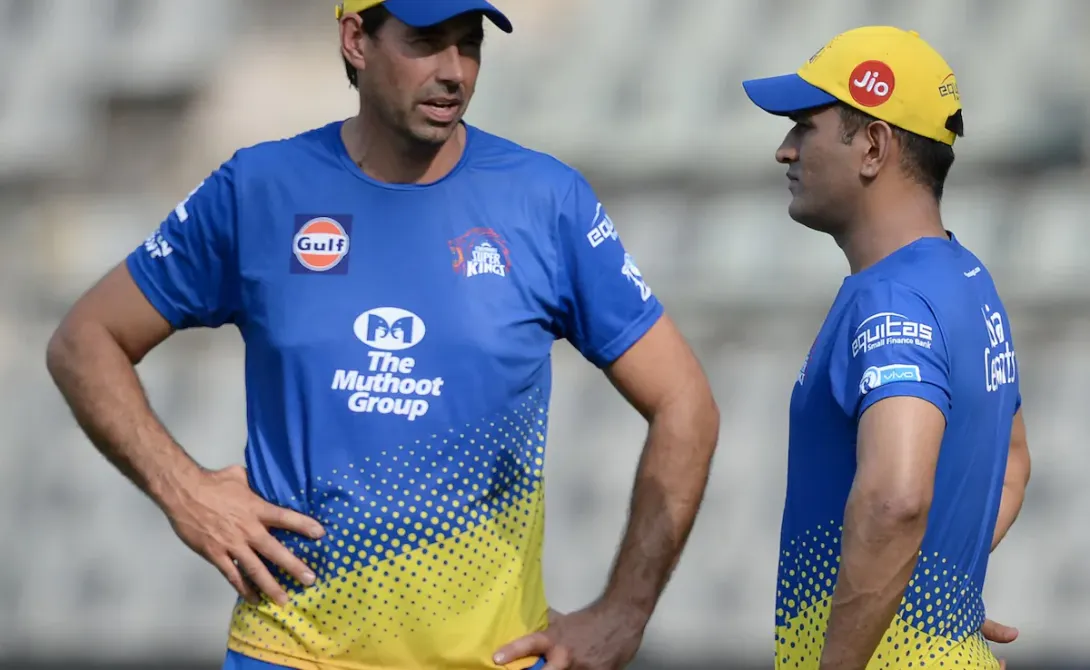
The ongoing developments involving Chennai Super Kings and Punjab Kings in the Indian Premier League 2026 highlight the convergence of sporting performance and financial imperatives. As the tournament intensifies, both franchises are navigating a critical phase where match outcomes directly influence playoff prospects, brand valuation, and revenue potential. CSK continues to rely on its legacy of consistency and disciplined execution, while PBKS seeks to overcome historical volatility. The rivalry underscores the IPL’s evolution into a high-stakes commercial ecosystem where strategic decisions on and off the field drive long-term value creation.
IPL 2026: A Strategic Inflection Point
The Indian Premier League has reached a juncture in its 2026 edition where competitive margins are narrowing and strategic clarity is paramount. For Chennai Super Kings, sustained excellence remains both an expectation and a benchmark. The franchise has built a reputation rooted in stability, leadership continuity, and calculated risk management.
Punjab Kings, in contrast, find themselves at a strategic crossroads. While endowed with significant talent and resources, the team continues to grapple with inconsistency—an issue that has historically limited its ability to convert potential into tangible success.
Performance Trends and Tactical Positioning
CSK’s operational model emphasizes predictability in execution. The team’s batting unit often prioritizes controlled aggression, ensuring that innings are constructed with minimal exposure to collapse. Their bowling strategies, similarly, are designed to apply incremental pressure rather than rely solely on breakthroughs.
PBKS adopts a more dynamic and aggressive approach. Their batting philosophy leans toward rapid scoring, often seeking to dominate the powerplay and middle overs. However, this approach introduces higher variance in outcomes, making risk management a critical component of their strategy.
Critical Drivers of Match Outcomes
Powerplay Efficiency:
Early dominance can significantly tilt the balance. CSK’s structured starts contrast with PBKS’s high-risk, high-reward aggression.
Middle-Order Stability:
The ability to absorb pressure and rotate strike remains vital, particularly in matches where early wickets fall.
Death Overs Precision:
Execution in the final overs—both with bat and ball—continues to define match results in T20 cricket.
Commercial Implications and Franchise Economics
The IPL’s financial architecture ensures that on-field success is closely linked to off-field profitability. Chennai Super Kings, widely regarded as one of the league’s most valuable franchises, benefits from a loyal fan base, strong sponsorship alignment, and consistent playoff appearances.
For Punjab Kings, improved performance represents a pathway to enhanced commercial credibility. A successful campaign can elevate brand perception, attract higher-value sponsorship deals, and deepen fan engagement across key markets.
The broader IPL ecosystem continues to thrive on media rights revenue, digital consumption growth, and global audience expansion, reinforcing its position as a premier sports business platform.
Playoff Dynamics and Forward Outlook
As the league table tightens, the margin for error diminishes. CSK’s objective is clear: maintain consistency and secure a favorable playoff position. Their track record suggests a strong capacity to peak at the right moment.
PBKS, meanwhile, must deliver a sequence of disciplined performances to remain competitive. The franchise’s ability to balance aggression with strategic restraint will be pivotal in shaping its campaign trajectory.
Conclusion
The evolving narrative of Chennai Super Kings and Punjab Kings in IPL 2026 exemplifies the league’s dual identity as both a sporting contest and a commercial powerhouse. As the season progresses, the interplay between performance metrics, strategic execution, and financial outcomes will continue to define success. For stakeholders across the spectrum, this rivalry offers valuable insights into the business of modern cricket, where every run and decision carries measurable economic significance.
Comments