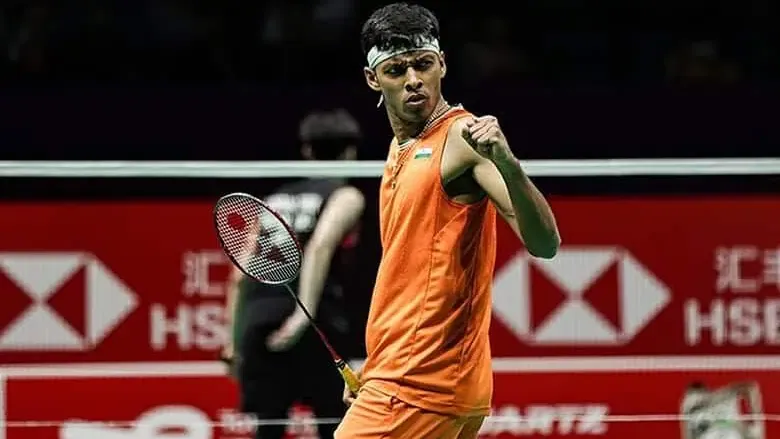
India’s bronze-medal finish at the Thomas Cup has reignited debate over the country’s uneven sporting culture after shuttler Chirag Shetty expressed disappointment over the team’s muted public reception. Despite defeating higher-ranked Chinese Taipei and delivering one of India’s strongest recent performances in international badminton, the achievement struggled to gain national attention amid election coverage and the commercial dominance of cricket. Shetty’s remarks have highlighted broader concerns surrounding media visibility, athlete recognition, and the economic imbalance between cricket and Olympic sports. The episode underscores the challenges India faces as it seeks to position itself as a global sporting power while continuing to undervalue achievements outside cricket’s commercial ecosystem.
A Bronze Medal Performance That Deserved Greater Recognition
India’s campaign at the Thomas Cup represented another significant chapter in the country’s rapidly evolving badminton journey. Competing against some of the strongest badminton nations in the world, the Indian men’s team produced a series of composed and tactically mature performances to secure a bronze medal finish.
Among the tournament’s standout moments was India’s commanding victory over Chinese Taipei, a side featuring players with superior international rankings and greater experience at the elite level. The result was widely viewed within badminton circles as evidence of India’s growing depth and competitiveness in global team events.
Yet, despite the magnitude of the achievement, public attention remained limited. The timing of the tournament coincided with intense election campaigning and saturation coverage of the Indian Premier League, leaving little space in mainstream discourse for badminton.
For many athletes and sports administrators, the contrast once again exposed the hierarchy that defines India’s sporting landscape.
Chirag Shetty Speaks Openly About the Disappointment
Indian doubles specialist Chirag Shetty offered a candid assessment of the team’s emotional experience following their return home.
According to Shetty, the players did not expect large celebrations at the airport because they had experienced similar indifference even after India’s historic Thomas Cup victory in 2022. However, he acknowledged that the lack of recognition remained disappointing, particularly considering the significance of winning medals at the international level.
His comments carried weight not only because of their honesty, but also because they reflected a sentiment increasingly shared by athletes competing outside cricket’s commercial spotlight.
For elite competitors, public acknowledgment serves as more than symbolic appreciation. It validates years of sacrifice, financial uncertainty, and physical commitment undertaken in pursuit of national success. When international achievements receive minimal recognition, it reinforces the perception that certain sports remain structurally marginalized regardless of results.
Shetty’s remarks quickly resonated across India’s sporting community, with many observers arguing that Olympic disciplines continue to struggle for sustained visibility despite producing consistent international success.
Cricket’s Commercial Dominance Continues to Shape Public Attention
The muted response to India’s Thomas Cup campaign also reflects the economic realities of Indian sport.
Cricket remains overwhelmingly dominant in terms of advertising revenues, broadcast investments, sponsorship deals, and audience engagement. The IPL alone operates as one of the world’s most valuable sporting properties, generating billions of rupees annually through media rights, franchise valuations, and corporate partnerships.
This commercial ecosystem inevitably influences editorial priorities, corporate spending, and public conversation.
By contrast, badminton — despite India’s emergence as a globally competitive force — receives significantly less institutional attention. Major international performances often struggle to remain in the news cycle beyond a few days unless tied directly to Olympic success.
Sports economists note that visibility and commercial investment are deeply interconnected. Media exposure drives sponsorship value, which in turn supports athlete development, grassroots participation, and infrastructure expansion. Sports lacking consistent visibility frequently find themselves trapped in a cycle of underinvestment despite competitive success.
India’s Sporting Ambitions Face a Cultural Test
The episode arrives at a time when India is aggressively pursuing a larger role in global sports governance and event hosting.
The country has expanded elite athlete funding programs, invested in sports infrastructure, and publicly expressed ambitions to host future editions of the Olympic Games and Asian Games. Policymakers increasingly describe sports as an instrument of soft power, economic development, and international branding.
However, experts argue that becoming a genuine sporting nation requires more than infrastructure spending and medal targets. It also demands cultural recognition of excellence across disciplines.
Countries with mature sporting ecosystems celebrate achievements regardless of commercial scale, understanding that sporting success contributes to national identity, youth aspiration, and global prestige. In India, however, recognition often remains concentrated around sports with large commercial returns rather than competitive accomplishment itself.
The reaction to the Thomas Cup bronze has therefore become symbolic of a broader imbalance within the country’s sporting consciousness.
Badminton Has Become One of India’s Strongest Global Sports
India’s rise in international badminton over the past decade has been remarkable. Athletes such as P. V. Sindhu, Saina Nehwal, Lakshya Sen, and the doubles pairing of Satwiksairaj Rankireddy and Chirag Shetty have consistently elevated India’s profile on the global stage.
The Thomas Cup performances reinforced that India’s badminton success is no longer dependent on isolated individual brilliance. The country now possesses a broader competitive structure capable of challenging traditional Asian powerhouses in team events.
That evolution has created expectations that achievements in badminton should command far greater national attention than they currently receive.
Recognition Matters Beyond Symbolism
The disappointment expressed by India’s badminton players is not merely about ceremonies or media headlines. Recognition carries tangible long-term consequences for athlete morale, youth participation, and commercial sustainability.
When sporting achievements are publicly celebrated, they inspire the next generation of athletes and encourage corporate investment into emerging disciplines. Conversely, limited recognition risks undermining momentum in sports that are beginning to establish international credibility.
India’s Thomas Cup bronze medal was more than a podium finish — it was evidence of the country’s growing sporting diversification. Yet the subdued response highlighted how far India still must travel before it can truly describe itself as a balanced sporting nation.
As voices like Chirag Shetty continue to challenge existing priorities, the conversation around athlete recognition, media responsibility, and sports culture in India is likely to grow louder in the years ahead.
Comments