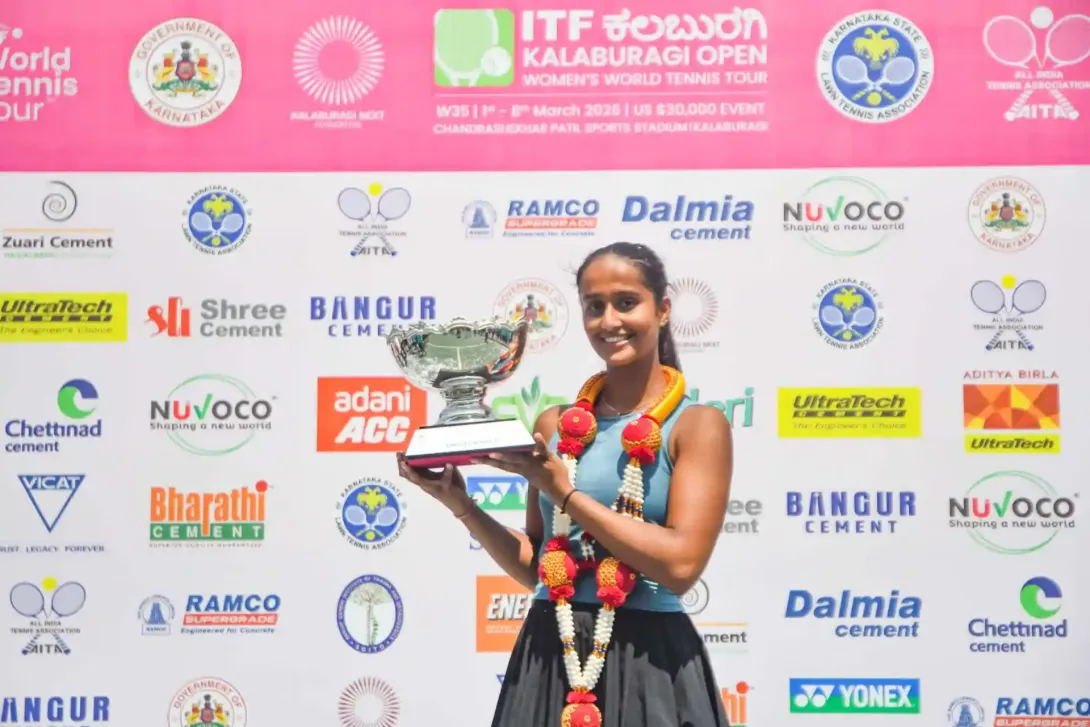
Indian tennis player Vaishnavi has entered a defining phase of her career, transitioning from a promising junior to a professional competitor. Beginning her journey in Pune at the age of seven, she built a strong technical and mental foundation that propelled her to the शीर्ष position in India’s U-14 rankings and a career-high ITF junior ranking of 115. Her progression illustrates a disciplined pathway from early talent identification to professional execution. As she continues to compete at higher levels, her development highlights both individual ambition and the growing maturity of India’s tennis ecosystem.
Early Beginnings: Building a Foundation in Pune
The story of Vaishnavi begins on the tennis courts of Pune, where she first picked up a racket at the age of seven. Early exposure to structured coaching and competitive play enabled her to develop core technical skills at a formative stage.
These initial years were critical in shaping her discipline, work ethic, and understanding of the game. In a sport where precision and consistency are paramount, such early grounding often determines long-term success.
Junior Dominance and Ranking Milestones
Vaishnavi’s rise through the junior ranks was marked by consistent performance and competitive excellence. She reached the top of India’s U-14 rankings, a significant achievement that established her as one of the country’s most promising young talents.
Her success extended beyond domestic circuits, culminating in a career-high ranking of 115 on the ITF junior circuit. Competing against international peers, she gained valuable exposure that enhanced both her tactical awareness and mental resilience.
Transition to Professional Tennis
The move from junior success to professional competition represents a pivotal and often challenging transition. For Vaishnavi, this phase marks the conversion of potential into measurable performance outcomes.
Professional tennis demands greater physical endurance, strategic depth, and psychological strength. Early indicators suggest that her structured development and competitive experience have equipped her to navigate these challenges effectively.
Strategic Growth and Competitive Outlook
Vaishnavi’s trajectory reflects a broader shift in Indian tennis toward more systematic talent development. Access to better training facilities, coaching expertise, and international exposure has enabled players to compete more effectively on the global stage.
Her ability to adapt to higher levels of competition will be crucial in determining her long-term success. Continued consistency, coupled with strategic match play, will define her progression in the professional circuit.
Economic and Ecosystem Impact
The emergence of players like Vaishnavi carries implications beyond individual achievement. Rising talent enhances the commercial appeal of tennis in India, attracting sponsorships, endorsements, and institutional investment.
From a financial perspective, successful athletes contribute to the sport’s ecosystem by driving audience engagement and increasing market visibility. This, in turn, supports the development of future talent pipelines.
Conclusion
Vaishnavi’s journey from a young aspirant in Pune to a rising professional underscores the evolution of India’s tennis framework. Her early achievements have laid a strong foundation, and her ongoing transition represents a critical phase of growth. As she continues to refine her game, her progress will not only shape her career but also contribute to the broader narrative of India’s emergence in global tennis.
Comments