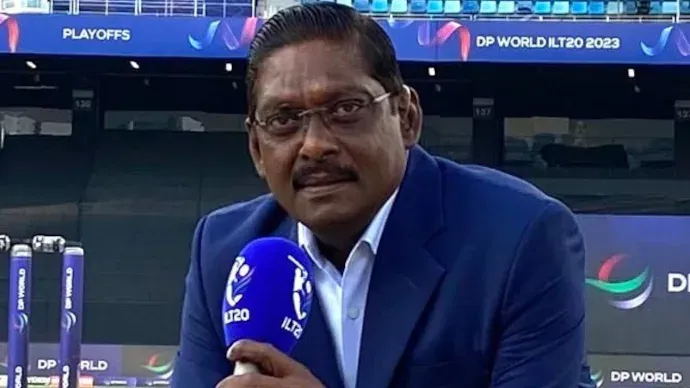
The retirement of former Indian leg-spinner Laxman Sivaramakrishnan from cricket commentary marks a significant moment in the evolution of modern sports broadcasting. After decades behind the microphone, Sivaramakrishnan has decided to step away from the commentary box, bringing to a close a career defined by technical expertise, passionate storytelling, and a deep understanding of spin bowling. His voice became synonymous with analytical cricket coverage across international tournaments and domestic leagues. As the global cricket media landscape increasingly shifts toward digital platforms and data-driven analysis, Sivaramakrishnan’s departure symbolizes a generational transition in sports commentary.
A Distinguished Voice in Cricket Broadcasting
For years, cricket audiences across television networks and digital platforms have relied on the insights of Laxman Sivaramakrishnan to decode the tactical intricacies of the sport. The former Indian international cricketer, celebrated for his mastery of leg-spin, has now formally stepped away from professional commentary.
His retirement concludes a long and influential chapter in cricket broadcasting. Known for combining deep technical analysis with animated delivery, Sivaramakrishnan carved out a distinctive niche in a competitive media landscape.
Sports broadcasting, particularly in cricket, depends heavily on former players who can translate complex strategies into language accessible to viewers. Sivaramakrishnan excelled in that role, becoming one of the recognizable voices of international cricket coverage.
From Spin Prodigy to Broadcast Analyst
Before his broadcasting career, Sivaramakrishnan rose to prominence as a gifted leg-spinner representing the India national cricket team during the 1980s. His performances against some of the world’s strongest batting line-ups earned him recognition as one of the most promising spin bowlers of his generation.
Although his international playing career was relatively brief, the tactical knowledge gained during those years later shaped his commentary style. Unlike many analysts who focus primarily on match narratives, Sivaramakrishnan regularly offered deeper explanations about bowling mechanics, pitch behavior, and field strategy.
Such insights were particularly valuable in subcontinental conditions, where spin bowling remains a decisive factor in match outcomes.
Building Authority in the Commentary Box
Over time, Sivaramakrishnan established himself as a respected analyst across global cricket tournaments and domestic competitions. His commentary often blended historical perspective with real-time tactical analysis, allowing viewers to better understand the dynamics unfolding on the field.
Colleagues and producers frequently noted his ability to simplify technical concepts without diluting their significance. Whether discussing wrist-spin variations or field placement strategies, his explanations resonated with both seasoned cricket enthusiasts and casual viewers.
His voice also became a familiar presence in major tournaments involving teams governed by organizations such as the International Cricket Council and the Board of Control for Cricket in India.
Changing Economics of Sports Media
Sivaramakrishnan’s departure arrives at a time when the economics of sports broadcasting are undergoing rapid transformation. Traditional television commentary is increasingly complemented by digital streaming, advanced performance analytics, and interactive fan engagement.
Media rights for cricket have grown into a multi-billion-rupee industry, attracting global technology companies and new broadcasting models. As networks diversify their commentary teams with younger analysts, data specialists, and digital creators, veteran voices are gradually making way for a new generation.
Yet the contribution of experienced former players remains indispensable. Their firsthand understanding of elite competition continues to provide credibility and depth to sports coverage.
Championing the Craft of Spin Bowling
Beyond match commentary, Sivaramakrishnan has consistently advocated for the development of spin bowling. Throughout his broadcasting career, he emphasized the importance of nurturing young wrist-spinners and preserving traditional bowling techniques.
His commentary frequently highlighted the tactical value of spin in modern cricket, particularly as fast-paced formats such as Twenty20 increasingly dominate the sport’s commercial ecosystem.
By using his platform to educate viewers and encourage young players, Sivaramakrishnan contributed meaningfully to the broader cricketing conversation.
A Legacy That Will Endure
As cricket broadcasting continues to evolve, the absence of Sivaramakrishnan’s voice will undoubtedly be felt by longtime fans. His commentary represented more than entertainment; it served as a bridge between cricket’s technical heritage and its modern spectacle.
For viewers who grew accustomed to his detailed breakdowns and passionate delivery, his retirement signals the end of a distinctive era in sports media.
Nevertheless, the legacy of Laxman Sivaramakrishnan will endure — not only through archived broadcasts but also through the deeper appreciation of spin bowling and cricket strategy that he helped cultivate among audiences worldwide.
Comments